
If you’re considering a serious upgrade to your workspace, installing modular office pods is no longer a fringe idea—it’s a strategic move. Having worked in workplace design and technology for over a decade, I’ve seen trends come and go; but modular office pods are one of the few that hit the sweet spot of flexibility, productivity, cost-effectiveness and future-proofing. Let’s dive into the 10 biggest benefits you should care about in 2025—and yes, this is actionable, no fluff.
1. Rapid Installation and Minimal Disruption
One of the first and often overlooked advantages of modular office pods is how fast they go in. Unlike traditional build-outs that may take weeks or months, many pods come prefabricated, drop into place, plug in and are ready for use. Industry data shows modular construction (and by extension modular pods) can be completed 20-50 % faster than conventional builds.
This means your team doesn’t lose momentum, you don’t disrupt your operations, and you start seeing benefits much sooner. For a business trying to scale or adapt quickly, that’s a major lever.
Action item: Measure how many days your current renovation would take and compare that to a pod installation window. The delta is your “productivity downtime saved”.
2. Cost-Efficiency & Lower Total Cost of Ownership
Pods aren’t just faster—they also offer cost advantages. Fewer onsite labor hours, less waste, fewer disruptions to core operations, all contribute to lower overall cost. Some sources note modular solutions reduce material waste and labour expense compared to stick-built alternatives.
Moreover, because the installations are less intrusive, you avoid hidden costs: overtime, lost productivity, extended leases or rental costs during downtime. Plus, if you later repurpose or relocate the pod, your investment retains value.
Action item: Build a simple ROI model: pod cost + minimal downtime versus building walls + disruption. See how many months it takes to break even.
3. Scalable Flexibility & Future-Proof Layouts
Your business isn’t static—not your team size, not your workflow, not your culture. Modular office pods give you layout flexibility: add, subtract, move or redefine spaces as needs change.
Unlike permanent walls or fixed meeting rooms, pods can shift. If you design your office with pods in mind, you create a plug-and-play environment. That means you can adapt to hybrid work, team re-orgs, growth spurts or contraction without major demolition.
In 2025, with hybrid/hot-desking becoming entrenched, this flexibility is a competitive advantage.
Action item: Map your next 24 months of growth or change. Ask: how many pods do I need now? What might I need after 12 months? Can this system scale accordingly?
4. Enhanced Acoustic Privacy & Worker Focus
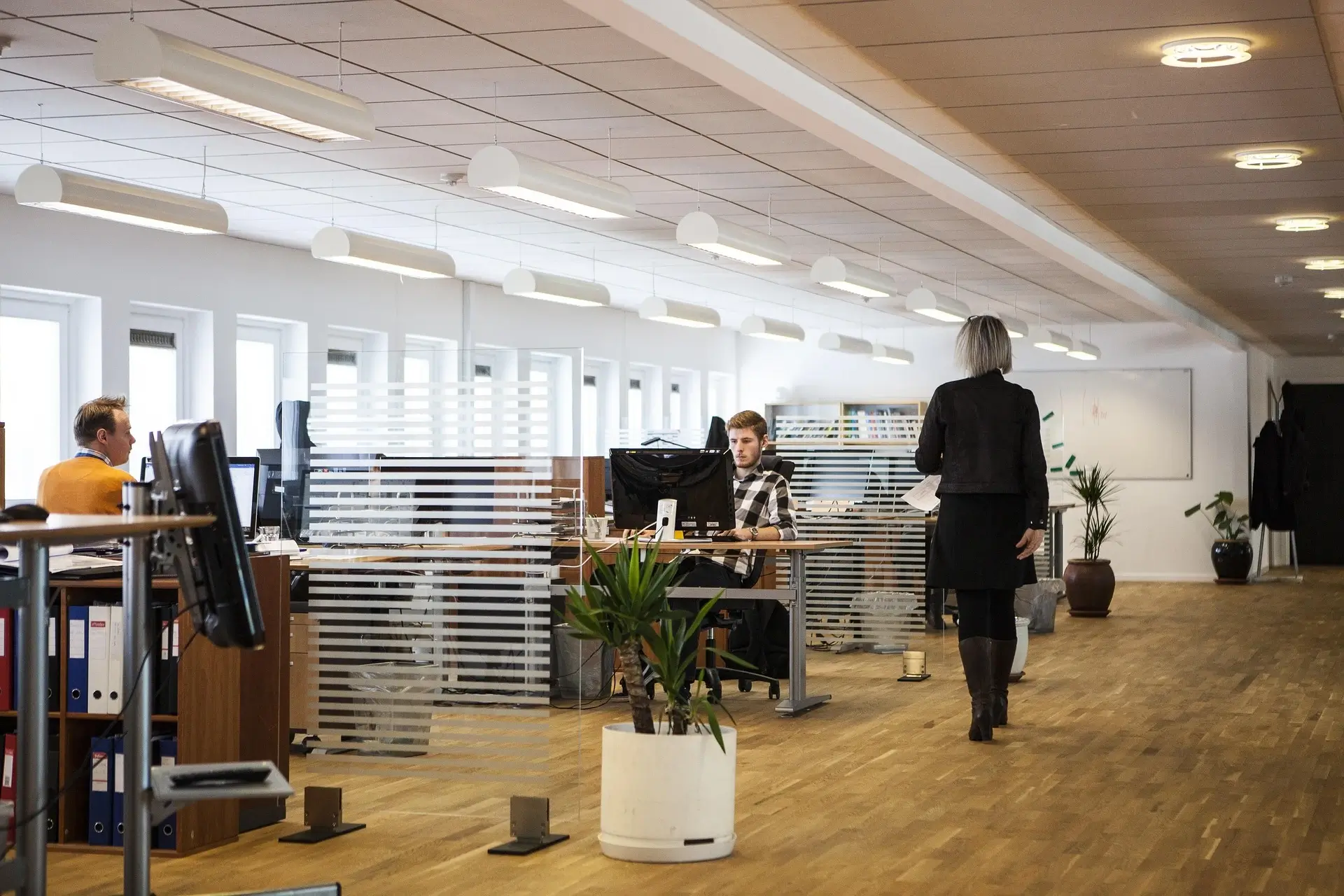
One of the biggest productivity drainers in open-plan offices is noise and distraction. Pods offer a quiet sanctuary: acoustic panels, sound-sealing, isolation from ambient office traffic.
When you give someone the option for uninterrupted focus or a private call, you’re making a statement: we value high-performance work. This leads to better concentration, fewer mistakes, higher morale.
Action item: Run a quick survey: how many employees feel “I cannot find a quiet place to work”? Then pilot one pod and track usage and feedback after one month.
5. Better Use of Under-utilised Space
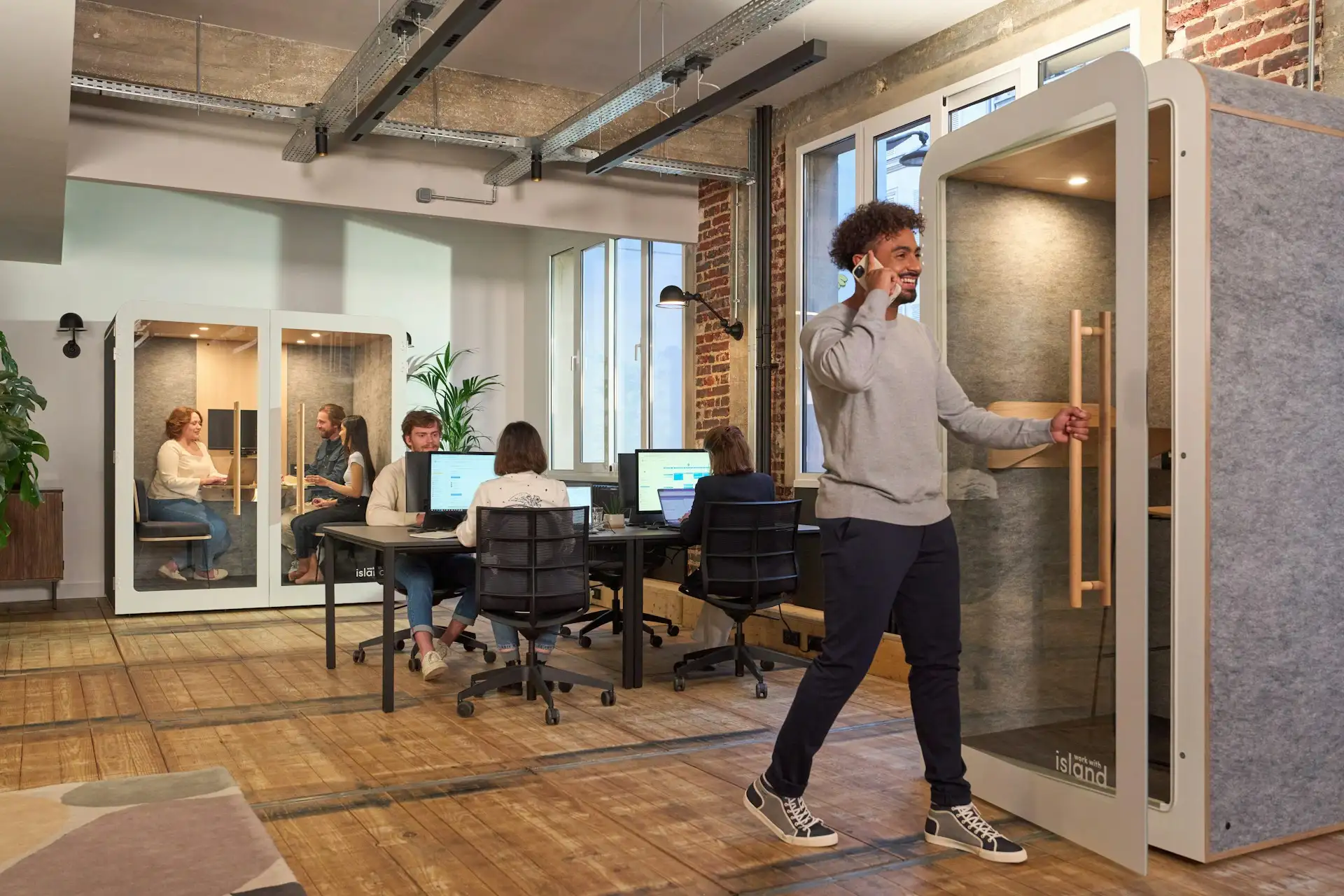
Offices often have “dead zones” — corners, mall-type open spaces, near windows that aren’t used, hallways. Pods allow you to exploit these areas. Because they are modular and self-contained, you can convert often-wasted space into meaningful workspace: focus pods, huddle rooms, video-call booths.
Maximizing space efficiency means you might even avoid needing additional lease area or can allocate space more flexibly.
Action item: Walk your office and tag 3 under-used areas. Sketch 1-2 pod units into each and estimate value gained.
6. Employee Well-being & Attraction of Talent
Workplace isn’t just about desks and computers anymore—it’s about experience. Pods give employees choice: they can opt for a private pod for a call, a collaboration pod for a quick team sync, or return to open plan. That freedom boosts satisfaction, lowers stress, promotes well-being.
In talent markets of 2025, every little edge counts. Having modern, flexible workspace features like pods signals you’re up-to-date and care about employee needs.
Action item: Survey employees: what would make your workspace more comfortable/functional? See how many mention privacy, focus or modular areas. Use that to build your case.
7. Technological Integration & Future Readiness
Modern pods are not just boxes—they are smart spaces. They often come with integrated lighting, ventilation/airflow, data and power ports, video-conference readiness. When you configure a pod properly, it becomes a digital-ready workspace that can support remote/hybrid meetings, screen sharing and collaboration.
By installing these units now, you’re setting up for future ways of working: cross-site teams, hybrid office/remote, flexible hours. Don’t wait until your layout becomes obsolete.
Action item: When selecting pods, ask: what tech ports, what ventilation, what AV integration are included? Make it part of your spec sheet.
8. Sustainability & Environmental Responsibility
Sustainability is no longer optional—it’s part of corporate and brand identity. Modular pods help here. Manufactured in controlled environments, they reduce waste, optimize material usage, support reuse or relocation, often use eco-friendly materials, and reduce the need for major construction and demolition.
That aligns not just with compliance/regulation but with employee expectations, stakeholder values, and brand reputation.
Action item: When buying pods, request data: what materials are used? What is the life cycle? What is the potential for relocation or reuse?
9. Improved Space Utilisation Metrics & Lease Optimisation
If you treat your office as an investment and operational metric, pods allow you to improve metrics like occupied desk ratio, meeting-room utilisation, space per head, etc. Rather than owning large meeting rooms that sit idle 70 % of the time, you can deploy multiple smaller pods and optimise utilisation.
Better utilisation may lead to smaller overall office footprint (lower lease cost) or more efficient headcount within the same space.
Action item: Measure your current meeting room utilisation (% of time idle). Compare to expected utilisation of multiple pods. Build scenario: 3 pods vs 1 large room.
10. Branding, Image & Employee Perception
Last but not least: the physical workspace sends a message. Installing well-designed modular pods shows you value design, agility and workflow. It becomes part of your culture. When clients visit, when candidates tour, those pods contribute subtly to your image: modern, innovative, flexible.
Don’t underestimate that psychological effect. For employees it says “we invest in your environment”. For clients it says “we’re serious, professional, forward-thinking”.
Action item: Before ordering, decide on design finishes, materials and branding touches inside your pods. Use that to reinforce your brand.
Implementation Tips & Pitfalls to Avoid
Since you’re not buying the pods just to look good—you’re buying them to perform—here are some execution pointers from my experience:
- Define use-cases up front: Are the pods for individual focus work? For team huddles? For video-calls? Size and features differ accordingly.
- Measure existing space carefully: Floor-to-ceiling heights, HVAC, electrical feeds, access for installation.
- Set tech and furniture spec early: Stop designing a shell then later realise “oh we need AV, data ports, screens”. Put that in your pod budget.
- Think relocation and repurposing: One of the biggest gains of pods is the ability to move them later. Ensure you’re installing with that in mind (casters, modular connections, minimal fixed wiring).
- Check acoustic and ventilation performance: Pod interiors can get stuffy or isolate too much if not designed with airflow. Ensure built-in ventilation or fan system.
- Plan for maintenance and lifecycle: Even though they’re modular, finishings wear. Plan expected lifecycle.
- Avoid over-customising beyond reason: Custom finishes are great, but don’t over specify in a way that kills your ROI or prevents future reuse.
- Get buy-in from users: Don’t just dump pods in the space—invite user feedback, designate them, monitor usage and adjust.
- Track measurement after installation: Are they used? Which ones? Are they improving metrics (utilisation, satisfaction)? Count the benefit to justify expansion.
In Summary
Installing modular office pods in 2025 isn’t just a nice-to-have—it’s a strategic move across a number of axes: speed, cost, flexibility, productivity, brand, employee experience, sustainability and utilisation. If I had to pick the one biggest leverage point it’s this: you’re buying adaptability. In a world where business evolves fast, your workspace needs to keep up—not drag you with it.
If you move forward, treat the purchase like any major business investment: define your objectives, measure current state, pick the right specification, track usage and outcomes. Then you’ll not only gain the direct benefits from the list above, you’ll build a capability for your organisation to evolve with minimum friction.
Ready to take action? Start with a pilot: choose one or two pods, install them, monitor for 90 days, capture metrics (utilisation, employee feedback, cost savings, time saved). If the results hit your expectations, scale accordingly.