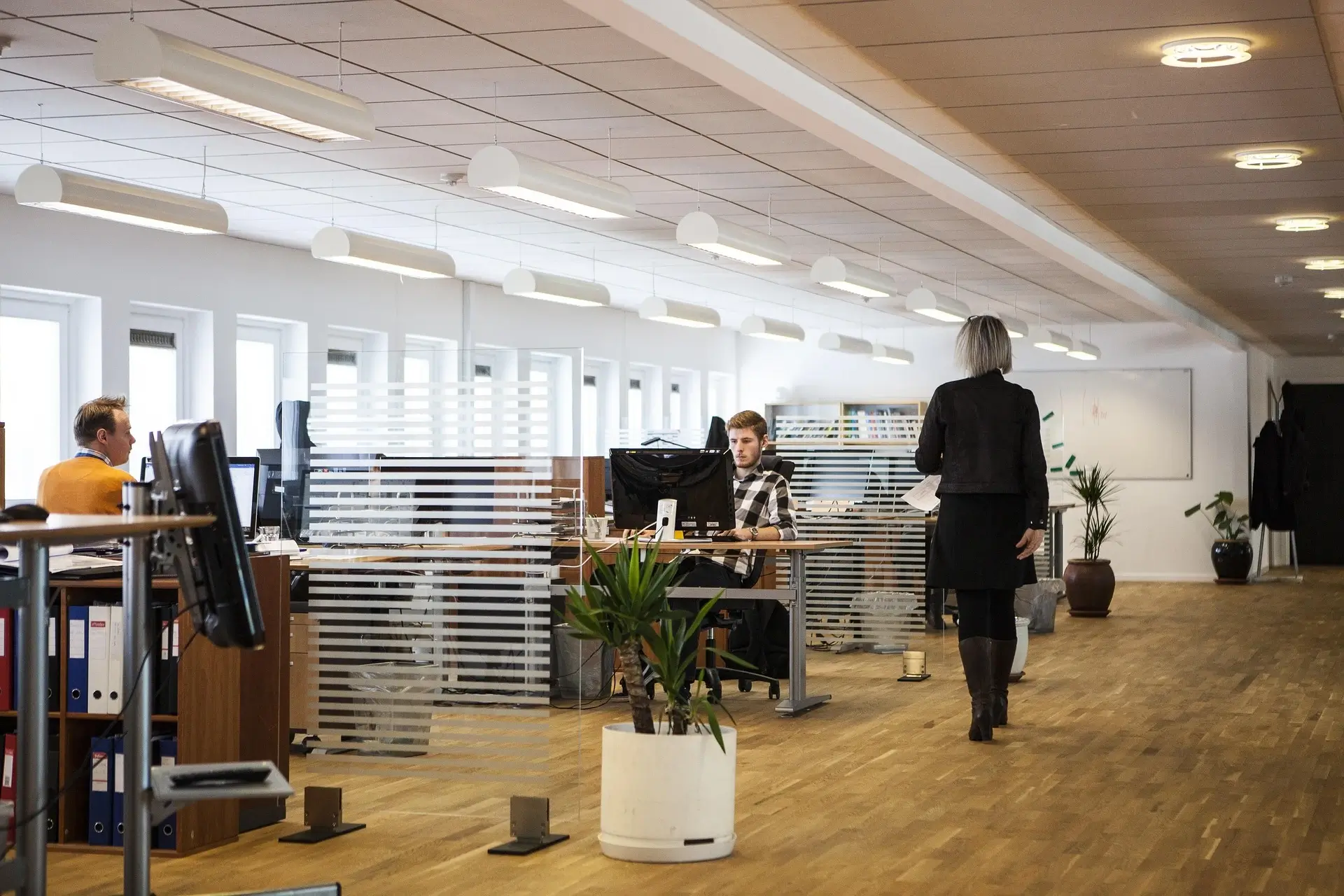


Modular Furniture for Offices
When it comes to outfitting modern workspaces, modular furniture is no longer an optional nice-to-have — it’s a strategic lever. From flexibility in layout to supporting hybrid work models, modular systems let you design for change, not just stability. After spending years working at the intersection of workspace design, procurement and installation, here’s a deep dive (yes, with some hard-earned insight) into how modular office furniture delivers value — and how you should think about specifying it, deploying it, and maximising return on investment.
What Is Modular Office Furniture?
“Modular office furniture” refers to furniture systems made of repeatable, interchangeable components — workstations, desks, storage towers, partitions, seating modules — that can be assembled in different configurations, expanded or re-configured as your organisation’s needs change.
Unlike fixed bespoke joinery, modular pieces are built with flexibility in mind: plug-and-play components, standardised connections, adaptable modules.
Why this matters
- Rapid layout change: As teams grow, shrink or re-organise, modular systems allow furniture to adapt instead of being replaced.
- Multi-use spaces: A space used for individual work today might become a collaborative zone tomorrow. Modular allows that shift.
- Cost mitigation: Buying furniture that can be reused / re-purposed protects your investment.
- Future-proofing: With hybrid work, fluctuating occupancy and evolving workflows, modular gives you options rather than being locked into one layout.
Market Trends & Strategic Drivers
You want numbers, context and trends? Good — because they underpin why this isn’t a fad.
Growth & market context
- The global modular furniture market was valued at about USD 81.3 billion in 2023 and is projected to grow to around USD 117.6 billion by 2032 (CAGR ≈ 4.3%).
- More specifically, the modular office furniture segment (commercial / corporate) has been estimated at around USD 30 billion in 2023 and is projected to reach USD 58 billion by 2032 (CAGR approx 8 %).
- Demand in the commercial office furniture market is being driven by ergonomics, sustainability, hybrid work models and flexible furnishings.
Key strategic drivers
- Hybrid & flexible work models: Organizations are no longer designing for “everyone in the office 9-5 at the same workstation”. This requires furniture that can shift from individual desks → team zones → hot-desks → meeting areas. (Source: modular systems leading growth)
- Sustainability and budgeting pressures: Furniture that lasts, re-configures, reduces waste and supports corporate sustainability targets is becoming standard.
- Space optimisation & cost per sq ft: Real estate is expensive. Modular systems allow more efficient use of space, adaptive re-use, and deferring full refit costs.
- Technology & integration: Furniture is now expected to integrate power, data, privacy screens, acoustic elements. Modular systems are better suited to layered tech-integration rather than bespoke inflexible joinery.
- Supply chain & future-proofing: Given uncertain supply chains, choosing furniture that can be upgraded or adapted rather than replaced is a leverage point for organisations. (See driver of modular market)
Benefits of Modular Office Furniture — Beyond the Obvious
Let’s unpack: I don’t want you to buy modular because it’s “trendy”; I want you to buy it because it delivers measurable (or at least objectively defensible) value.
1. Faster installation & less disruption
Since components are standardised and pre-manufactured, installation is typically faster, with less on-site construction, fewer trades, less disruption to the business. That equates to cost savings (labour/time) and less downtime.
2. Adaptability to organisational change
When your team expands, contracts, or shifts function (think: a sales area becomes a product-team hub), modular workstations can be reconfigured. That means you don’t have to rip everything out and start from scratch.
Tip: When specifying, ask for modules that allow “future-state expansion” — extra worktops, add-on storage modules, re-usable screens.
3. Reduced total cost of ownership (TCO)
Because you’re not locked into fixed build, you can amortise the investment over multiple configurations. Also: re-using modules reduces disposal/replacement cost.
Insight: Talk to your supplier about not just “first cost” but “cost per seat over 5 or 10 years” — modular often wins when you factor change cycles.
4. Supports employee wellness & productivity
Modern modules can include ergonomic surfaces (height-adjustable desks), acoustics (sound-absorbing panels), and easy collaboration zones. That means less fatigue, more comfort, which correlates with productivity (though measuring that is itself a project).
For example: the push for ergonomic, modular seating and furniture in the commercial market is cited as a driver.
5. Alignment with sustainability & brand values
Today’s organisations want furniture that meets material standards (recycled content, low VOC finishes, FSC wood, modular reuse). Modular furniture supports this because you can keep the structure and just change the top panels or surfaces rather than replacing the whole thing.
Also: the modular furniture market notes the “eco-friendly sentiment” is boosting growth.
6. Better use of space & flexibility
You can create zones, overlay functionality, convert individual desks into teams, or create focus hubs, all with the same modular footprint. This agility matters when occupancy fluctuates (e.g., hybrid working).
Example: In Europe, modular furniture adoption rose to 33 % in commercial office furniture shipments, and flexible furniture systems grew by 25 %.
What to Look for When Specifying Modular Furniture
Here’s where the years of doing this help: you must ask the right questions and focus on the right attributes, not just the “looks”.
A. Quality & durability of modules
- Are the connection systems tested for repeated reconfigurations?
- Are surface finishes durable / replaceable?
- Is the frame robust (metal vs thin cheap aluminium) if you expect to re-use over 10+ years?
- Does the manufacturer provide a modular expansion roadmap (i.e., add-ons, swap-tops)?
B. Configuration flexibility
- Can you shift from single workstations → paired → benching → team pods without full rebuild?
- Does the system include add-ons (storage, privacy screens, technology mounts) that integrate cleanly?
- Are re-use paths clear (i.e., when you down-size, can modules convert or reduce footprint rather than sit idle)?
C. Ergonomics & integration
- Height-adjustable surfaces (sit-stand) should be compatible with the module frames.
- Cable management, power/data integration (USB, wireless charging, network ports) should be part of the modular system, not an afterthought.
- Acoustics: are screens, panels, and separators designed to dampen sound? This is especially critical in open plan or hybrid offices.
D. Sustainability credentials
- What is the material spec (recycled content, FSC wood, low-VOC finishes)?
- Can modules be recycled or repurposed at end-of-life?
- Does the vendor offer a reuse/reconfigure program (so your future reconfiguration isn’t full-buy)?
E. Cost structure & future change-costs
- Understand the “change cost” of reconfiguration: how much will it cost to add seats, convert layout, move modules?
- Look for modular systems that advertise “move-and-reuse” rather than “new build each time”.
- Calculate TCO: initial cost + planned change cycles + end-of-life. Modular should show savings over fixed joinery when you expect change.
F. Vendor support & supply chain
- Does the vendor have good lead times for add-ons and modules? (Given global supply challenges, this matters.)
- Are stock parts standardised (so you’re not locked into custom every time you want to reconfigure)?
- Are replacement parts readily available (e.g., screens, tops, frames) so you’re not forced to replace entire units?
Practical Deployment Tips & Common Pitfalls
Here’s where execution matters. Modular furniture is not automatically “easy” — you must treat it strategically.
Tip 1: Define change-scenarios upfront
Don’t just design for “today’s team size”. Model scenarios: “What if team doubles?”, “What if we switch to more collaborative pods?”, “What if we reduce footprint and go hybrid-first?”. Then pick a modular system that can handle those flips.
Tip 2: Map out modules vs layout as separate layers
Rather than thinking “we’ll buy desks and chairs”, think “we’ll buy base modules (frames/legs) + interchangeable tops/storage/screens”. This gives you a “kit of parts” mindset, which aligns with agile space planning.
Tip 3: Use “reuse budget”
When conducting your furniture budget, allocate a portion for “re-use / reconfigure” not just new-buy. This ensures you don’t treat modular as “buy once and forget”. Good vendors allow you to add or remove modules cost-effectively.
Tip 4: Lay infrastructure ahead
Modular is best when preceded by good infrastructure: power/data drop locations, flexible floor-box layouts, cable management channels. If you ignore infrastructure, modules will be constrained. This often is the root cause when modular fails.
Tip 5: Manage the “messy middle” of change
During change-cycles (teams move, layouts shift) you’ll encounter junk modules, spare pieces, mis-matched tops. Treat this proactively: plan for a “module inventory” and reuse strategy rather than letting spares pile up.
Common Pitfalls
- Under-estimating change cost: Buying modules is good; but if vendor charges full “new unit” cost for later change, you lose value.
- Buying too rigid a module: Some systems claim modularity but have very limited configuration flexibility or non-standard add-ons.
- Ignoring acoustics / privacy: Many modular systems focus on desks + storage but neglect privacy/noise. In open or hybrid spaces this becomes a major issue.
- Not planning for infrastructure: As noted above — if power/data doesn’t follow the changing layout, modular furniture won’t shine.
- Specifying trend over longevity: Don’t pick modules purely for “look” now; ensure they’ll stand up over multiple uses and re-configurations.
Modular Furniture Use-Cases in Office Environments
Let’s explore real-world scenarios so you can see how modular furniture responds.
Scenario A: Fast-growing startup
Company: 50 employees today, expecting to double in 18 months.
Challenge: Need desks now, but expect frequent moves, team splits, collaboration zones.
Solution: Choose modular workstations with shared legs/frames, interchangeable tops, add-on storage. Use benching modules that can convert into team pods. If team doubles, simply add tops and storage modules rather than new complete desks.
Scenario B: Hybrid hub office
Company: 200 employees, but only ~60 % onsite on any given day; want flexible “touchdown” pods + collaborative hubs.
Challenge: Layout must change weekly/monthly.
Solution: Modular furniture with flip-tops, mobile pedestals, partitions on castors. This allows shifting from individual desks → small teams → open lounge area. Modules with integrated power/data make moving easier. Also, acoustic screen add-ons help when people converge.
Scenario C: Corporate refresh every 7–10 years
Company: 1000 seats, major refit every decade. Want furniture that supports the refresh without full replacement.
Challenge: Minimising capital cost, supporting new workflows (e.g., agile teams) during refresh.
Solution: Select high-quality modular system up front; keep the base frames for 10+ years; refresh tops, screens, accessories every refresh cycle. This reduces waste, cost and enables continuity.
Materials, Finishes & Sustainability Considerations
As someone who has specified thousands of seats and modules, the choice of materials and finish is not cosmetic — it affects durability, re-usability and lifecycle cost.
Materials
- Frame / Structure: Steel or heavy gauge aluminium is preferred. Lighter cheap frames might flex or degrade when reconfigured repeatedly.
- Worktops / Tops: Laminates, real wood veneer, solid surface depending on budget. Look for scratch resistance, edge durability. Also ensure replaceability.
- Screens / Privacy Panels: Fabric panels, acoustic foam cores, wood/metal frames. Insist on acoustic rating if noise is a concern.
- Storage Modules: Consider modular towers with interchangeable doors, drawers. Ensure compatibility with the base system.
Finishes
- Choose neutral, timeless finishes for ease of reuse. Bright trends might limit re-use.
- Consider modular secondary finishes: e.g., you pick a system with a standard finish palette but allow “accent” panels that can change over time.
- Pay attention to replacement finishes: if a surface gets damaged, can you buy a new top instead of replacing the whole unit?
Sustainability
- Ask for recycled content, recyclability, end-of-life reuse.
- Modular furniture inherently reduces waste if you reuse modules rather than replace.
- Ensure vendor provides a take-back or refurbishment programme (or reselling module support).
- Consider certifications (FSC, GREENGUARD, etc) — while not mandatory, they signal vendor commitment.
Budgeting & ROI — What the Numbers Tell Us
Here are the metrics you should track (and challenge your vendor on).
Key metrics
- Cost per workstation: Initial cost.
- Change cost per workstation: Cost to expand/reconfigure per seat.
- Reuse rate: Percentage of modules reused at next refresh. Higher reuse → better ROI.
- Lifecycle (years): How many years before full replacement? Modular systems often aim for 10-15 years of flexibility.
- Occupancy flexibility: Ability to go from X seats to Y seats within same footprint.
- Space utilisation: Are you able to reduce space per person, or support more versatile usage?
- Downtime/disruption cost: Faster reconfigurations reduce business interruption.
What you might expect
- If you anticipate layout changes every 3-5 years, modular furniture often pays off compared to bespoke build.
- Example: If custom joinery costs $5000/seat with little reuse, vs modular at $4000/seat but 80 % reuse at refresh, over 10 years modular wins.
- Consider “opportunity cost” of shutdown/disruption if furniture can’t be moved quickly. That is harder to quantify but real.
Designing for Re-Use & Future-Proofing: Best Practice Checklist
- Define your change-scenarios (growth, contraction, team shifts) and build modules that support those.
- Select a modular system (frames + interchangeable tops/screens + add-ons) rather than fixed units.
- Ensure infrastructure (power/data, cable management) is mobile/flexible to match module shifts.
- Track module inventory from day one (what you have, where it is, re-use potential).
- Procure spare modules (or budget for them) as part of initial investment — this prevents scramble later.
- Maintain a “module life-cycle plan”: when will you refresh tops/screens/storage? What will you reuse vs buy new?
- Choose finishes and materials that can live through multiple iterations. Neutrals are better for reuse.
- Build vendor relationship: ensure they have standardised modules, replacement parts, support for reconfiguration.
- Track performance: time to reconfigure, cost to add seats, speed of roll-out. Use these as internal metrics for your furniture strategy.
- At refresh time, reuse as many modules as possible — avoid ripping everything out unless you have to.
Addressing Common Questions & Objections
“Is modular furniture more expensive upfront than fixed joinery?”
Often yes, but the extra cost is offset by flexibility, reuse and lower change-cost over time. If you expect few changes, fixed may look cheaper, but if change happens, modular will outperform.
“Will modular look cheap / less premium?”
Not if you specify quality modules. The market now has high-end modular systems that rival bespoke in finish and feel. The key is choosing vendor and materials smartly.
“What about acoustics / privacy in open plan with modular?”
Good question — this is where specification matters. Use modular systems with integrated acoustic panels/screens. Don’t just buy open benches and expect privacy. Incorporating modular partitions, pods and smart screen add-ons is essential.
“Does modular furniture limit design creativity?”
Actually the opposite — it gives greater design freedom. Because modules can be moved, you are less locked into one plan. You can iterate layouts, test hotspots for collaboration, convert zones. Design becomes dynamic.
“Is it sustainable?”
Yes — when used as intended. By re-configuring rather than replacing, you minimise waste. But you must make reuse part of the furniture strategy; otherwise modularness is wasted.
Final Thoughts
If you’re designing or refreshing an office — corporate, startup, co-working or hybrid hub — modular furniture isn’t just a style choice: it’s a strategic investment. Treat your furniture strategy like you treat your tech strategy: choose for agility, change-readiness and reuse. When done right, modular lets you shift layout in days instead of months, scales with your business, and avoids the “rip-and-replace” trap that eats budgets and disrupts workflows.
So next time you are specifying desks, screens and storage — stop thinking “what we need now” and ask “what we’ll need in 3, 5, 10 years”. Then pick modular. Your workspace will thank you (and so will your CFO).