

Introduction: Why Modular Furniture Matters Now
Walking into any high-end furniture showroom these days, you’ll see modular systems prominently displayed. There’s reason — modular furniture has evolved from a niche idea to a foundational strategy in interior and exterior design. Whether we’re discussing modular outdoor furniture, modular leather seating, or modular office furniture, the core promise is the same: flexibility, longevity, and adaptability.
Over the years, I’ve seen clients face the same frustrations: a sofa that doesn’t fit a new place, an office layout that becomes obsolete, or a patio that’s useful for a gathering but useless the rest of the season. Modular systems offer a solution. In this article, we’ll dive deep into modular outdoor, modular leather, modular patio, and modular office furniture, exploring the materials, use cases, pros and cons, design tips, and trends for 2025 and beyond.
Origins & Philosophy of Modular Design
Modular furniture isn’t a recent fad. In fact, in the 1940s, designer Harvey Probber pioneered the idea of sectional, modular seating, allowing flexibility in arrangement and usage. That principle has matured — modern advances in materials, joinery, and consumer expectations have allowed modular design to infiltrate almost every category of furnishing.
At its essence, modular design is about units (modules) that combine and recombine to form different compositions. Whether for indoor living, outdoor patios, or office systems, the goal is to let the furniture grow and shift with your needs instead of locking you into one shape or one era.
Modular Outdoor & Modular Patio Furniture
Why Choose Modular Outdoors?
- Adaptability to Outdoor Space Geometry
Every patio, deck, balcony or garden has its quirks. With modular components, you can tailor your layout to fit L-shaped corners, odd angles, or long narrow spaces. - Scalable Seating for Entertaining or Solitude
You might host ten guests one evening and just want a couple of cozy chairs the next. Modules let you shift from U-shapes to linear lounges or broken-up conversation clusters. - Easier Maintenance & Replacement
If one cushion gets stained or one frame is damaged, you don’t need to replace the entire set—just that module. - Sustainability & Longevity
Because modules can be swapped, updated, or upgraded over time, you avoid discarding full sets and reduce waste. - Blurring Indoor–Outdoor Boundaries
The trend of “bringing indoor comfort outdoors” has gained momentum: fully upholstered modular sectionals built for outdoor conditions, fused aesthetics and weather durability.
Key Considerations: Materials, Joinery & Durability
When designing or selecting modular outdoor pieces, you’ll want to scrutinize:
- Frame materials
- Teak is a classic. Naturally weather-resistant, resistant to rot and insects, and beautifully patinas over time.
- Powder-coated aluminum is lightweight, rust-proof, and ideal for modular systems.
- Marine-grade stainless steel or hardware for connectors and fasteners to resist corrosion.
- Resin wicker / synthetic wicker offers weather resilience with a woven aesthetic.
- Cushion fabrics & foam
- Use performance fabrics such as Sunbrella-style textiles: UV-resistant, mold- and mildew-proof, fade-resistant, and quick-dry.
- Use fast-draining / quick-dry foam cores to avoid waterlogging.
- Consider attaching cushions with ties or Velcro (or hidden clips) so they stay in place in wind or when modules shift.
- Connection systems
- Magnets, clips, interlocking legs, or dowel systems help modules stay together when in use without compromising ease of reconfiguration.
- Avoid loose modules that drift apart under weight unless they come with locking systems.
- Modular geometry & scale
- Plan for standard module sizes (e.g. 30–36″ wide units, corner units, ottoman segments).
- Respect proportion: too many small modules can feel cluttered; too few can limit flexibility.
Trends for 2025 & What’s Evolving
- Integrated storage: Hidden compartments or bench modules with lids to stow cushions or accessories.
- Rounded, organic shapes: Systems that go beyond rigid rectangles — curved modules that allow flowing layouts.
- Hybrid indoor-outdoor aesthetics: Sofas that look like indoor lounge seating but are built for the elements.
- Neutral palettes + accent pops: Soft neutrals dominate, with accent pillows or modules offering bold color contrast.
- Modular dining and multi-purpose modules: Systems where modules flip between dining seats or lounge seats, or double as side tables.
Possible Downsides & Mitigations
- Modules shifting / separation
If the joining hardware is weak or missing, modules may drift—always insist on a robust connector system. - Initial complexity
Deciding how many modules, what types, and what layout can be overwhelming. - Cost & lead time
Quality modular systems are often higher-priced and may require custom ordering or longer fabrication times. - Over-design/over-buying
It’s tempting to keep ordering new modules; plan your core set first and grow only as needed.
Modular Leather Furniture
When you hear “modular leather furniture,” you’re often thinking modular sofas, sectionals or seating units upholstered in leather (genuine, full-grain, top-grain, or high-end leather alternatives). Here’s what to watch for:
Why Leather in Modular Form?
- Timeless elegance + durability
Leather ages beautifully, resisting stains and showing patina over time if cared for properly. Its classic aesthetic pairs well with modular design. - Modular expansion with upholstery
You can start with a simple two-seat modular leather unit and expand with corner pieces, chaises, or arm modules, tailoring to room changes or moving houses. - Hybrid design appeal
Leather modules often combine with metal or wooden frames, allowing contrast and design flexibility.
Key Challenges & Solutions
- Weight
Leather-upholstered modules tend to be heavier. Use robust connectors and possibly wheels or glides to assist rearranging. - Seams and wear points
Edges and joints between modules should be reinforced since they can see higher stress. High-end modular leather systems often include hidden reinforcements. - Cleaning & care
Leather needs occasional conditioning. In modular systems, it’s easier to rotate or remove modules for maintenance.
Use Cases
- Living rooms where flexibility is needed (e.g. movie nights vs. hosting).
- Commercial hospitality or lounges where modular leather adds a luxe, cohesive look but allows rearrangement for events.
- Waiting rooms or upscale offices where durability and style merge.
Modular Office Furniture
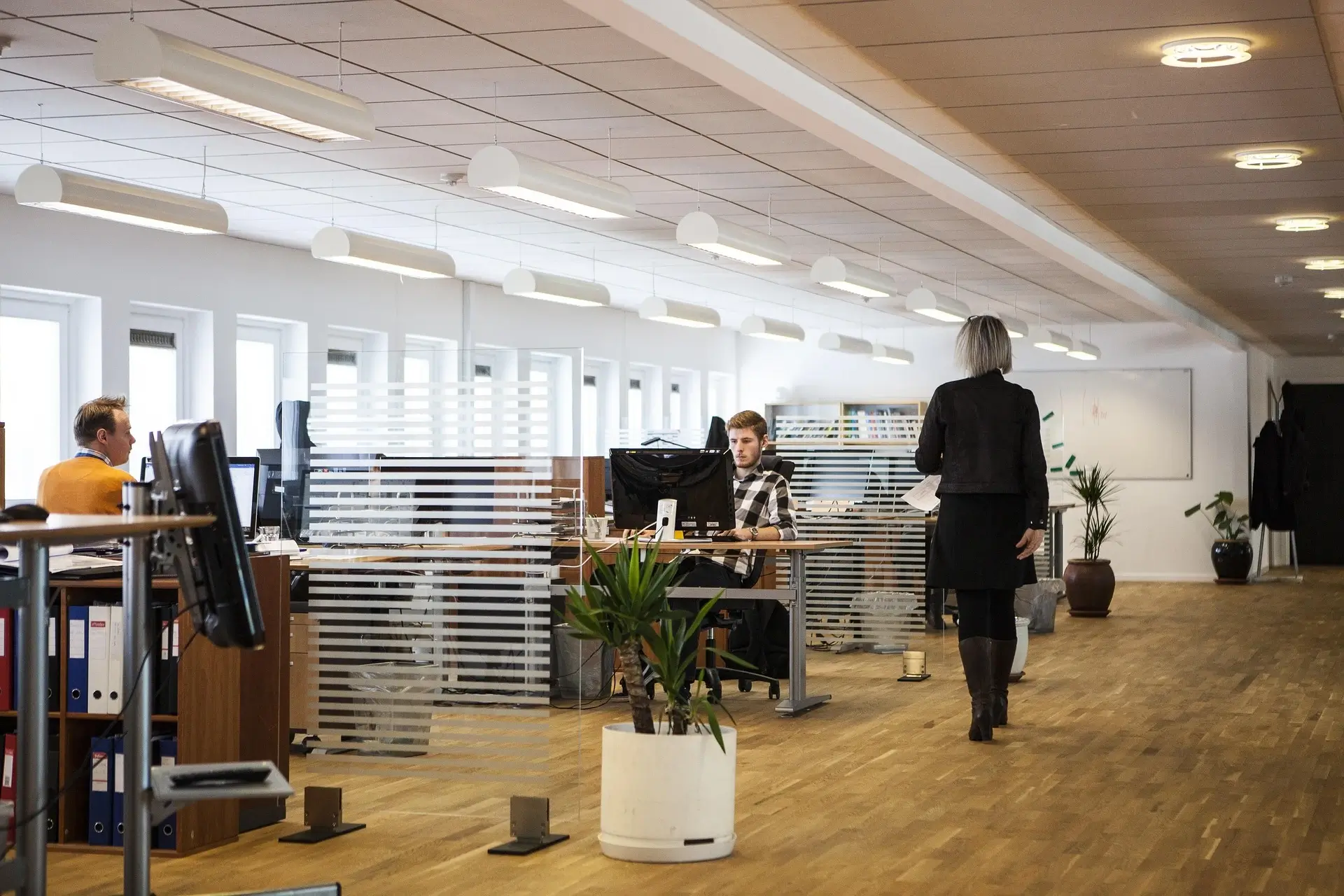
In the modern workplace, modular systems are nearly everywhere—from desking to benching systems to modular lounge seating in collaborative zones.
Why Modular Works for Offices
- Adaptable layouts
As your team grows, shrinks or pivots, modular desks, shelves, and seating can be reconfigured rather than replaced. - Optimized use of space
Many offices have odd floorplans; modular systems allow carving zones (focus, meeting, casual) that suit the space rather than forcing rigid layouts. - Ease of change & relocation
Because modules are lighter and componentized, moving or renovating costs less time and effort. - Branding and flexibility in aesthetics
Change surface panels, colors, materials, or add modules for collaboration zones, without scrapping entire systems.
Modular Office vs Traditional Office Furniture
- Traditional: fixed dimensions, often bulky, not meant to be reconfigured.
- Modular: versatile, scalable, repairable, often lighter, but with sometimes steeper initial design decisions.
Things to Follow
- Ensure compatibility across modules (height, finish, connector types).
- Prioritize cable management features within modules (wire troughs, grommets).
- Look for acoustic modules or screen interfaces, especially in open offices.
- Choose durable surfaces resistant to frequent use and reconfiguration.
- Don’t overcomplicate early — get a robust base layout before expanding.
Common Pitfalls
- Modules that don’t lock firmly and shift under use.
- Mismatched aesthetics when expanding later.
- Underestimating the need for support (legs, junctions) in longer runs.
- Ignoring ergonomics in favor of modular flexibility.
Integrating Modular Across Use Cases
It’s not uncommon to have a home or business that uses modular furniture across multiple areas. Some helpful strategies:
- Use consistent materials or accents (e.g. the same metal or wood finish) across indoor, outdoor, and office modular pieces to build visual harmony.
- Plan modular furniture growth in phases: start with a core, add modules as need (and budget) arises.
- Prioritize reconfigurability and adaptability over decorative excess that’s harder to change.
Modular Furniture Buying Strategy: Step-by-Step
- Measure & map your space
Do a rough-to-scale drawing, factor in walkways, door swings, and any fixed elements (planters, pillars). - Decide core modules first
E.g. two armless seat + one corner + one ottoman = four modules. Then you can expand. - Prioritize structural integrity
Make sure connectors, hardware, external joints are highly rated for load, weather, reconfiguration. - Test sample modules if possible
Sit, rearrange, simulate wear and shifting. Modular furniture is only as good as its usability. - Order thoughtfully
Choose modules you can live with by themselves; don’t rely on “later expansion” to get a basic useful layout. - Plan for maintenance
Ensure modules can be individually accessed, removed, repaired or replaced without disrupting your entire setup. - Document module configuration
When you hit on a layout you like, photograph or draw it so you can reassemble later if you disassemble.
Voices from the Field & Unique Insights
- Over time, I’ve seen clients reluctant to adopt modular furniture because “they look too generic.” But what often wins them over is seeing how a single module can travel between rooms, outdoor spaces, and offices as needs change.
- In outdoor projects, advising a client to overbuild the connector (magnets, clips, dowels) saved them from re-buying modules later because pieces shifted.
- In one office renovation, the client swapped out a meeting area module for a bar/collaboration module within 30 minutes mid-day — that’s the kind of flexibility that pays dividends.
- Beware of “style lock” — some modular systems aesthetic-age quickly. Favor neutral, timeless finishes you can accent later.
Conclusion
Modular furniture, whether outdoor, leather-based, or for office settings, is far more than a trend. It is an investment in flexibility, resilience, and design longevity. Done well, modular systems allow your spaces to adapt with you rather than force you to adapt to them.
When you select modules intelligently, with attention to materials, joinery, ergonomics, and aesthetics, you end up with living, breathing layouts that can morph for seasons, needs, events, and growth.