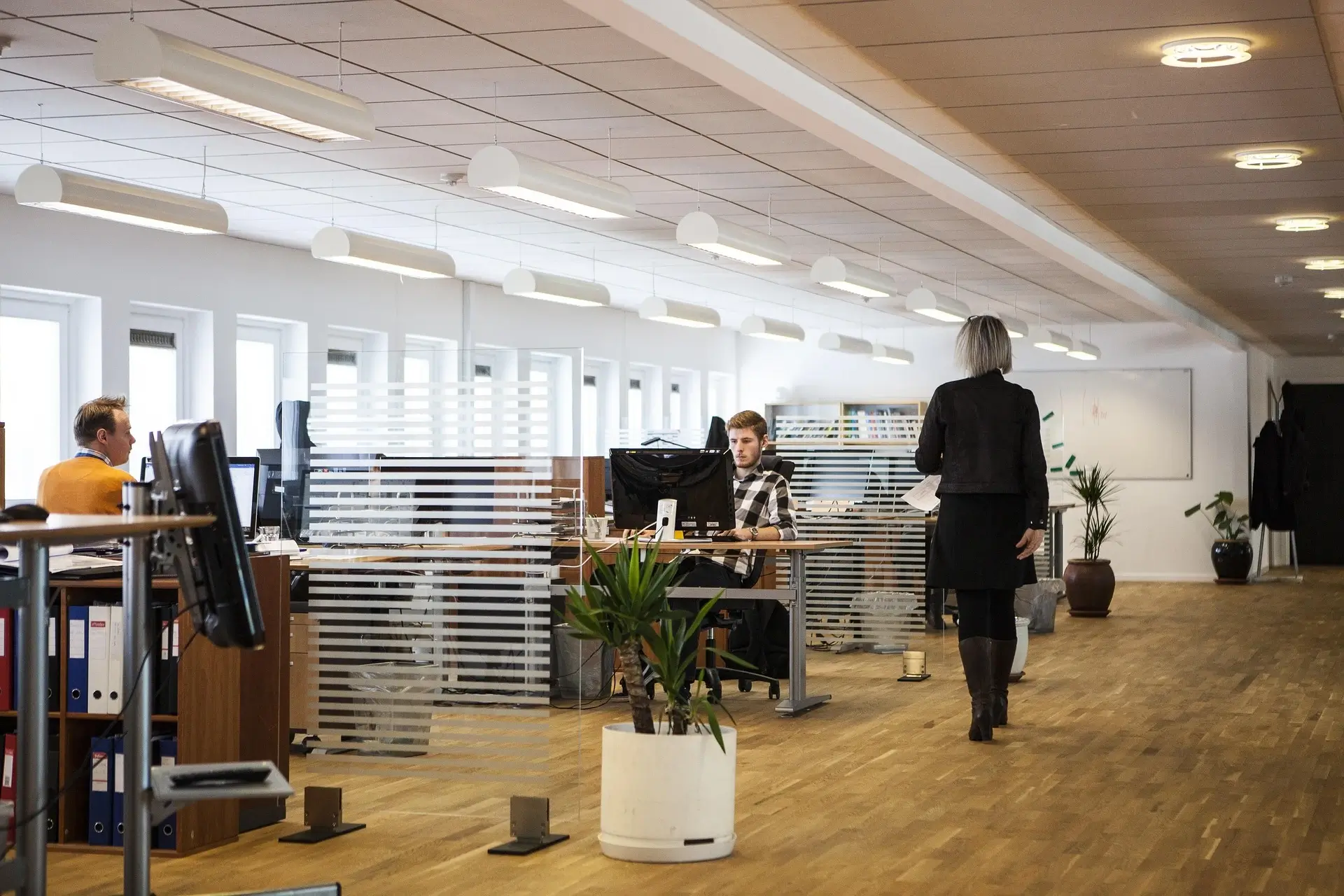

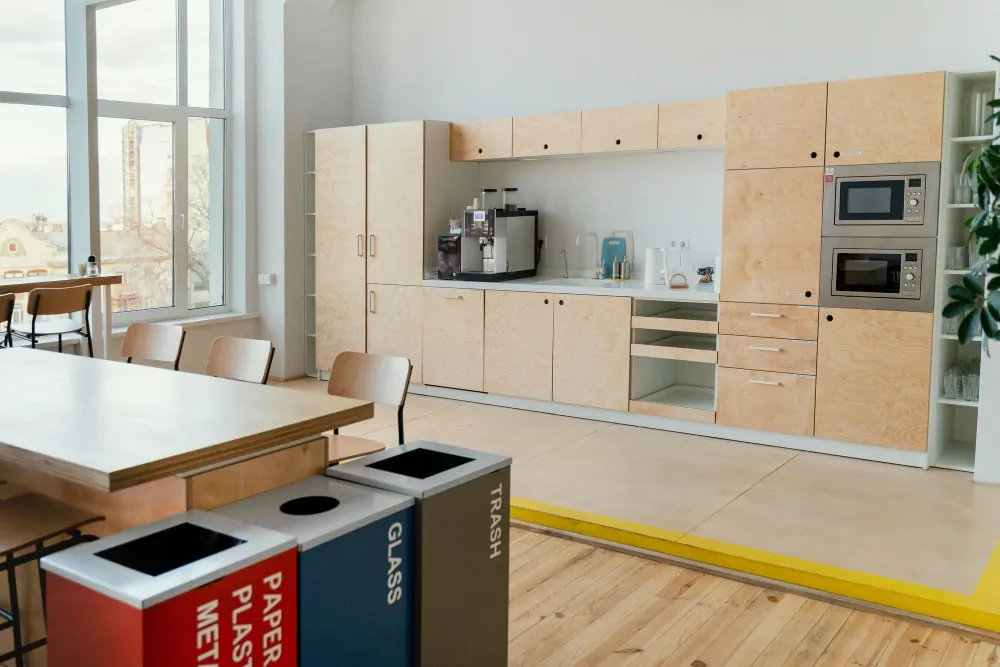
Choosing the right office furniture isn’t just a design decision anymore — it’s a strategic business move. Furniture influences productivity, workflow, space utilization, budget flexibility, company culture, and even long-term operational efficiency. Over the years, I’ve seen businesses dramatically transform their work environments simply by rethinking how their office is furnished.
When companies evaluate their options today, they typically face two main paths: modular office furniture and fixed office furniture. Both camps have strong advantages, and both come with trade-offs — yet the best choice depends heavily on your company’s structure, growth patterns, work culture, and space constraints.
This guide digs deeply into the real considerations that matter — beyond the usual surface-level comparisons — so you can make a confident, strategic decision for your workspace.
What Is Modular Office Furniture?
Modular furniture is designed for flexibility. Every piece — whether it’s a workstation, partition, storage unit, or seating arrangement — can be moved, reconfigured, expanded, or replaced with minimal disruption.
It’s not just “moveable furniture.” The entire system is built as an interchangeable ecosystem, where components fit together in different combinations. Think of it as LEGO® for the workplace — adaptable, scalable, and designed with change in mind.
Key Characteristics of Modular Furniture
- Easy to rearrange or expand
- Lightweight and mobile components
- Interlocking systems for workstations
- Built with scalability in mind
- Minimal installation downtime
- Compatible with hybrid and collaborative work setups
- Often integrates cable management and ergonomic upgrades
What Is Fixed Office Furniture?
Fixed furniture is built into the physical structure of the office. Workstations, partitions, storage, and cabinetry are installed permanently and are not intended to be moved frequently.
Fixed furniture usually has a more robust, premium, and long-term architectural presence, often associated with traditional offices, law firms, financial institutions, and organizations that prioritize privacy and stability over flexibility.
Key Characteristics of Fixed Furniture
- Permanently installed
- Highly durable and long-lasting
- Custom-built for the space
- Provides strong visual uniformity
- Excellent for privacy-focused workflows
- Creates a more corporate, structured environment
- Minimal wear and tear from movement
Modular vs. Fixed Office Furniture: A Detailed Comparison
1. Flexibility & Scalability
Modular:
If your company is growing, restructuring departments, or adapting to hybrid work — modular furniture is a game changer. Teams can scale up or down without a total redesign. I’ve seen companies rearrange entire departments in a single afternoon with modular systems, without calling in carpenters or electricians.
Fixed:
Better for businesses with stable teams and defined divisions. Once installed, the layout is permanent. Any change usually requires carpentry, rewiring, or significant downtime. Great for companies that don’t anticipate major team changes.
Winner: Modular
2. Cost Effectiveness (Short-Term vs. Long-Term)
Here’s where many companies make mistakes: short-term cost vs. long-term value.
Modular:
- Typically cheaper initially compared to custom-built fixed installations
- Saves major costs during reconfiguration or expansion
- Minimal downtime = cost savings
- However, high-end modular systems can approach the cost of fixed options
Fixed:
- Higher upfront investment due to customization and installation
- Lower long-term replacement frequency
- Looks premium, stable, and high-value for decades
- Costly to modify later
If your business evolves frequently, modular saves money.
If your business is static, fixed may provide better value over time.
Winner: Depends on growth patterns
3. Aesthetics & Brand Impression
Modular:
Modern, clean, and collaborative. It reflects innovation and adaptability — suitable for tech companies, startups, creative agencies, and hybrid workplaces.
Fixed:
Premium, structured, and authoritative. Ideal for firms that want to project stability, professionalism, and a strong corporate identity.
Here’s the nuance few talk about:
Modular can look premium if high-quality systems are chosen. Fixed can look modern if designed with contemporary finishes. The aesthetic argument isn’t black and white.
Winner: Tie — depends on brand personality
4. Durability
Modular:
Designed for movement, but typically lighter materials. High-end modular systems are incredibly durable, but cheaper ones wear out faster with frequent reconfiguration.
Fixed:
The clear winner in durability. Built-ins are robust, stable, and long-lasting because they’re literally anchored to the structure.
Winner: Fixed
5. Space Utilization
This is where experience in office planning truly matters.
Modular:
Might seem like the more space-efficient choice — and usually, it is. But modular systems sometimes leave unused gaps if not chosen correctly. Still, modular is excellent for:
- small offices
- multifunctional areas
- collaborative zones
- hybrid workspaces
Fixed:
If custom-built, fixed furniture can achieve exceptional space optimization because every inch can be designed precisely for the floor plan. In tight spaces, custom fixed furniture often performs better.
Winner:
- Small spaces → Fixed
- Growing or reconfigurable spaces → Modular
6. Employee Comfort & Ergonomics
Modern modular systems are built with ergonomics in mind — adjustable desks, movable storage, modular partitions for privacy or collaboration.
However, fixed furniture is often custom-built specifically for the team’s workflow, which means it can be ergonomically perfect if planned well.
Winner: Modular (for general adaptability)
Winner: Fixed (for tailored ergonomic design)
7. Maintenance
Modular:
Individual units can be replaced or repaired with minimal disruption. Easy to clean around since nothing is permanently fixed.
Fixed:
More difficult to repair because components are built-in. If damage occurs, repairs can be labor-intensive or require custom fabrication.
Winner: Modular
8. Privacy & Noise Control
Modular:
Best for open-plan offices where collaboration is key. Privacy screens exist, but they rarely match the acoustic performance of fixed partitions.
Fixed:
Provides superior acoustic control and visual privacy — especially useful for roles that handle confidential information.
Winner: Fixed
When Should You Choose Modular Furniture?
Choose modular office furniture if your company:
- Expects growth, mergers, or frequent restructuring
- Uses a hybrid or flexible work model
- Needs multipurpose spaces (training rooms, project rooms, etc.)
- Values collaboration over privacy
- Wants to reduce downtime during reconfigurations
- Has shorter leases or relocates often
- Wants a modern, vibrant workspace
Ideal for:
Startups, tech firms, agencies, co-working spaces, consulting teams, educational institutions, rapidly scaling businesses.
When Should You Choose Fixed Furniture?
Choose fixed office furniture if your company:
- Prefers a stable, consistent layout
- Has long-term leases or owns its workspace
- Prioritizes privacy and structured workflows
- Handles sensitive or confidential information
- Wants a premium, architectural look
- Requires maximum durability
- Has traditional roles and well-defined departments
Ideal for:
Law firms, finance companies, government offices, established corporations, archival departments, HR divisions.
Hybrid Approach: The Most Overlooked (and Often Best) Option
Most companies don’t need to choose one or the other exclusively. The smartest workplaces often use a hybrid approach:
- Modular for: workstations, collaborative areas, training rooms
- Fixed for: storage areas, reception, executive cabins, pantries, IT rooms
This combination gives you flexibility where you need it and stability where it matters most.
If you’re planning a full office overhaul, this is the strategy that usually delivers the best long-term ROI.
Common Mistakes Companies Make When Choosing Office Furniture
1. Choosing based on trends instead of function
Open-plan offices look great on Pinterest, but they’re not ideal for every team.
2. Underestimating future growth
A layout that feels perfect now may become obsolete in as little as six months.
3. Ignoring acoustics
Noise control is always a bigger problem than companies anticipate.
4. Buying cheap modular systems
Low-quality modular furniture becomes wobbly, cheap-looking, and short-lived.
5. Fixing furniture too rigidly
Once fixed installations go in, modifying the space becomes expensive.
How to Decide: A Practical Framework
Use this quick decision guide:
If your company grows or changes teams often → Choose Modular
If you need privacy and stability → Choose Fixed
If you’re designing common areas → Mostly Modular
If you’re designing executive or confidential zones → Mostly Fixed
If budget flexibility matters → Modular
If long-term durability matters → Fixed
If you want the most efficient overall layout → Combine Both
Modular vs. Fixed Furniture Cost Comparison (General Insight)
Note: No external sources are referenced and no exact pricing is given, only industry-based approximation.
| Category | Modular Furniture | Fixed Furniture |
|---|---|---|
| Upfront Cost | Lower to Medium | Medium to High |
| Long-Term Cost | Low (due to flexibility) | High (due to renovation costs) |
| Maintenance | Easy | Complex |
| Repairs | Replaceable units | Requires professionals |
| Reconfiguration Cost | Minimal | High |
Real-World Applications: What Different Departments Need
Here are recommendations based on typical departmental needs:
Sales, Marketing, Creative Teams
- Thrive in collaborative setups
- Require brainstorming zones
- Benefit from movable desks & whiteboards
→ Modular is ideal
Finance, HR, Legal
- Need privacy and controlled noise
- Paperwork-heavy, confidential
→ Fixed is more suitable
IT & Technical Teams
- Need cable management
- Require large equipment setups
→ Hybrid recommended
Leadership & Executive Offices
- Often require a premium look
- Meeting rooms benefit from fixed tables
→ Fixed or hybrid
Final Verdict: Which Is Right for Your Company?
There’s no one-size-fits-all answer — and if someone tells you otherwise, they’re oversimplifying. The right furniture system depends entirely on your growth pattern, workflow, privacy needs, space constraints, and culture.
However, in today’s landscape, most modern companies benefit from a hybrid model:
modular for flexibility + fixed for durability and privacy.
Choose the ratio that aligns with your business strategy, and your office will remain future-proof, comfortable, and efficient for years to come.