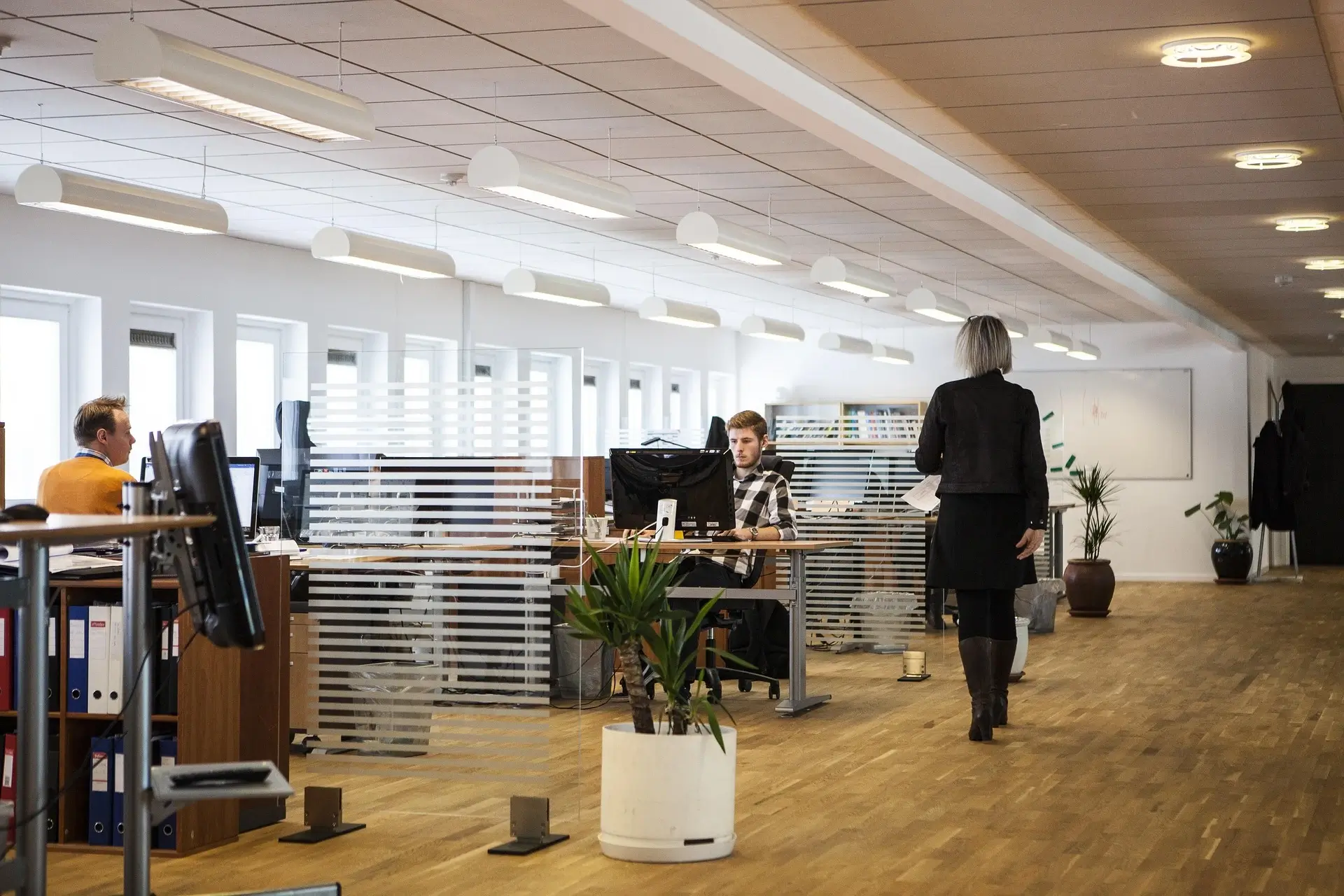


There comes a point in every organization when the physical layout of the workspace stops being an enabler and starts becoming a constraint. After many years advising companies on workspace strategy, I’ve seen that the right reconfiguration of the office—what we might call “reshuffling the spatial DNA”—can make or break your team’s ability to connect meaningfully, move fast, and feel motivated. In this article I’ll pull together hard-headed insights on how reconfiguring your office can raise collaboration, lift morale, and ultimately deliver business value.
Why Office Reconfiguration Matters
At first glance you might think: “We’ll wait until the next lease, or when budget allows a full renovation.” But that’s a mistake. The layout of your workspace communicates how you value connection, how you expect people to move and interact—and when you reconfigure it thoughtfully, you change behaviour.
Studies show that environments where people bump into each other, see spontaneous interactions, or simply feel part of something bigger, lead to stronger social ties and innovation. One research piece points out that even though remote tools improve reach, they don’t replace certain types of in-person interaction.
At the same time, one classic study found that simply stripping walls and going “open plan” without intention actually reduced face-to-face interaction by ~70%.
What this means: it’s not the walls per se, it’s the design of interaction spaces, the visibility, the chance moments, the balance of focus vs collaboration zones.
The morale multiplier
Morale isn’t a ‘nice to have’—it’s the engine for discretionary effort. When people feel their environment is designed for them—when they are invited into collaborative zones, casual meet-ups, serendipitous exchanges—they feel part of something. And when your layout forces people into isolated cells, or makes collaboration awkward, the message is: “We didn’t design for you to connect.” That kills morale.
One article put it bluntly: when a workspace is redesigned for social connection, you don’t just increase collaboration—you rebuild the network of “weak ties” that drive innovation and engagement.
Five Reconfiguration Strategies That Work
I’m going to give you five concrete, result-driven reconfiguration strategies. Apply these to your office and expect measurable change—if you execute with discipline.
1. Map movement and interaction nodes
Start by observing how people move, where they congregate, where friction exists. Too many layouts assume team adjacencies or collaboration zones without data.
What to do: Identify high-traffic zones, informal gathering spots (coffee areas, stairwells, waiting zones). Then reconfigure to make these nodes more central. Place benches, whiteboards, agile hubs where people naturally pause.
Why it works: According to data, in-person collaboration is more than planned meetings – it’s the “by the water-cooler” moments. One survey found 73 % of hybrid employees felt more connected when in-office with colleagues.
2. Create layers of interaction: planned + serendipitous
Don’t just build big meeting rooms and call it done. You need a spectrum: solo focus zones → small huddle pods → cross-team lounges → large interactive zones.
What to do: Introduce small “pop-up” style spaces (rolling whiteboards, mobile seating), lounge corners next to work-areas, casual tables for coffee or quick stand-ups. Ensure the layout supports spontaneous collisions.
Why it works: Research on “weak ties” (casual relationships across teams) shows they’re critical to high-performing organizations. The physical environment must allow them to form.
3. Balance focus + collaboration elegantly
One of the biggest mistakes: designers push “collaboration everywhere” and forget people still need to think, focus, get deep work done. If you eliminate that, people get frustrated, distracted—and morale drops.
What to do: Identify and preserve quiet zones, phone-booths, focus rooms. Make sure they are acoustically treated and easily bookable. Then place them adjacent to collaborative zones rather than isolated. This allows easy movement between focus and team work.
Why it works: An article pointed out that the “best collaborative spaces also support solitude.”
4. Introduce visibility, but avoid performance pressure
Visibility can encourage collaboration—but when overdone you create the “fourth wall” effect: people feel observed and withdraw. The study that found decreased interaction in open layout attributed it to people behaving like performers under watch.
What to do: Use semi-transparent partitions, mobile screens, partial height walls or soft acoustic panels rather than full height glass walls. Maintain lines of sight into interaction zones, but provide cues (e.g., signage, lighting) that invite collaboration rather than enforcement.
Why it works: It strikes the balance of visibility without the downside of “everyone sees me”.
5. Empower mobility and modularity
Your reconfiguration won’t last unless it’s flexible. The office of tomorrow changes monthly, if not weekly. People move teams, projects pivot, hybrid presence shifts. If the furniture and zones are fixed, morale erodes when teams feel stuck with outdated layout.
What to do: Use modular furniture, mobile whiteboards, flexible seating clusters, power/data points built into floor or overhead so zones can shift. Plan infrastructure that supports reconfiguration.
Why it works: Research in office productivity shows that layout flexibility amplifies collaboration and keeps morale up because people feel the space evolves with them.
Real Stakes: What You’ll Gain (And What You’ll Avoid)
Gains
- Higher spontaneous interaction rates: More cross-team conversations = faster problem solving, higher innovation.
- Better morale and engagement: People feel their workplace works for them, creating more discretionary effort.
- Faster adaptability: When your layout can shift, your business can shift faster. Projects start quicker, teams reorganise faster.
- Improved attraction & retention: A modern, human-centred workspace becomes a differentiator in talent markets.
- Optimised space usage: Right-sized zones and flexible layouts mean you use your real estate better, lowering cost per engaged employee.
Risks / What you’ll avoid
- Stagnant culture: If your environment feels locked-in, employees feel locked-in too.
- Hidden friction: When layouts don’t match workflows, collaboration is harder and frustration builds.
- Wasted real estate: Big open zones that nobody uses become dust collectors; mis-allocated space leads to disengagement.
- Morale drop: People perceive poor layouts as signalling “we don’t value you” or “we built this for someone else”.
- Missed opportunity for hybrid: When you don’t reconfigure for hybrid presence, people either stay remote or show up but feel second-class.
Execution: From Plan to Delivery
Having the strategy is one thing; execution is often the root cause of failure. Let’s walk through key steps and traps.
Step 1: Conduct a usage audit
- Map current movement: who goes where, how often, what zones are over-used/under-used.
- Survey your teams: how do they feel about collaboration, focus, environment? What zones do they avoid and why?
- Identify cost of delay: What is the cost (time, morale, turnover) of keeping the current layout?
Step 2: Define target behaviours
- Do you want more cross-functional interaction? More innovation? More casual team check-ins? More deep-focus work?
- Use these behaviours to define zones: e.g., “adjacent to the café we want a team info-hub”; “we need huddle zones near the engineering floor”.
Step 3: Create the zone map & prototype
- Sketch out zones: focus pods, team hubs, cross-team lounge, quiet rooms.
- Build a prototype or pilot area before full roll-out. Test behaviours, collect feedback, adjust.
- In the pilot you may find unexpected patterns—this is good data.
Step 4: Infrastructure + furniture alignment
- Ensure power, data, acoustics, lighting align with the new zones. Many reconfigurations fail because infrastructure is ignored.
- Choose furniture that supports mobility and modularity. Avoid fixed joinery if you expect change.
- Acoustic treatment is critical: collaboration zones are noisy; focus zones must be quiet.
Step 5: Change-management & communication
- Communicate to teams why you’re reconfiguring, what behaviours you want, how this benefits them.
- Invite feedback and embed mechanisms for iteration.
- Set clear timeline, phases of move, and support teams during move-in.
Step 6: Measure, iterate, sustain
- Define KPIs: e.g., number of informal team interactions, usage of lounge zones, survey on morale/engagement.
- After rollout, revisit in 3-6-12 months. What’s working? What’s not? Adjust.
- Make reconfiguration part of the operating rhythm: quarterly check-ins to move furniture, shift zones, refresh spaces.
The Hybrid Era & Why Reconfiguration is More Urgent
The post-pandemic office isn’t “back to normal” — it’s permanently changed. Hybrid presence means fewer fixed desks, more dynamic usage. Within that context, your reconfiguration strategy becomes even more important.
- A hybrid workforce needs destination zones: where coming into the office is worth it. If you show up to sit at a desk you could have at home, morale suffers. The office must deliver something unique: high-quality collaboration space, connection, social energy.
- Flexibility becomes non-negotiable. Teams show up on different days; seating must flex. Zones must be able to collapse/expand depending on occupancy.
- Avoid the trap of repurposing collaboration zones into more desks because “we need more seats”. That sends the wrong message. One article argues this is counter-productive: reducing collaboration space to fit more people works against the goal of bringing people back to collaborate.
Common Pitfalls & How to Avoid Them
- Reconfiguring without behaviour change: You move walls but don’t ask “how do people work now?” Result: new layout, same silos.
Solution: tie layout change to workflow change workshops. - Ignoring acoustics: Open zones are noisy; people retreat to isolated desks rather than collaborate.
Solution: invest in acoustic panels, zoning that naturally divides noisy vs quiet. - Furniture mismatch: You buy fixed desks or furniture that can’t adapt—layout becomes static again.
Solution: choose modular/mobile furniture and define reconfiguration budget. - One-size-fits-all: Applying same layout to every team.
Solution: tailor zones to team type – creative vs operation vs sales each need different adjacencies. - Failure to measure: You deploy and forget. You lose momentum.
Solution: set pre-move baseline, then measure engagement, interaction, zone usage. - Stakeholder neglect: If teams don’t feel heard, morale may drop even if layout is “better”.
Solution: engage teams early, prototype with them, involve them in change.
Case Example (Hypothetical but Based on Real Practice)
Company X (approx 150 staff) had a traditional layout: rows of desks in squad clusters, few breakout zones, minimal casual interaction. Collaboration was limited, morale stalling.
They audited movement and discovered that the café area was under-used, the corridors were empty, teams rarely crossed paths. They then reconfigured:
- Created a “collaboration lounge” near the café: comfortable seating, whiteboards, informal meeting spot.
- Introduced “huddle galleries” around team zones: small pods with moveable partitions for 2-4 people.
- Made “focus towers”: small glass-walled rooms for heads-down time, adjacent to active zones.
- Rolled out a mobile furniture fleet: whiteboards on wheels, stools, high tables.
- Infrastructure: added floor-boxed power/data near collaboration lounge, acoustic ceiling in lounge.
- Change-manage: team leads briefed; usage tracked for 6 months.
Results: Within six months they saw a 28 % uptick in cross-team meetings (via room-booking & check-in logs), a 15 % rise in self-reported morale in employee survey, and teams reported faster “ideation-to-prototype” cycles (per internal metrics). They also avoided hiring additional real-estate by better utilisation of existing space.
Measuring Success & ROI
It’s not enough to feel good about a re-configuration—you need to measure.
Metrics to track
- Frequency of informal interactions (check badge-in/room-use logs or survey).
- Utilisation rate of collaboration zones vs individual desks.
- Changes in employee engagement/morale (via pulse surveys).
- Time from idea to execution (for innovation teams).
- Turnover or retention trends (though many factors influence this).
- Real-estate cost per “active employee” if reconfiguration allows footprint optimisation.
What a positive ROI looks like
If you build a new collaboration lounge and the furniture/infrastructure cost is X, you should expect it to deliver:
- more frequent cross-functional collaboration
- higher morale (which lowers attrition cost)
- faster decision-making
- potentially reduce the need for individual desks (in hybrid models)
Over 2-3 years, those benefits can significantly outweigh the upfront cost.
Final Thoughts
If you’re still looking at your workspace as “just a place to put desks”, you’re missing the point. Modern employees expect environments that enable them — to connect, to create, to feel part of something. Reconfiguring your office layout is not a luxury—it’s a strategic lever.
In practical terms: treat your workspace like a dynamic asset, not a fixed one. Use movement data, engage your teams, build zones that support both the “we” and the “me” (collaboration + focus), make infrastructure flexible, and monitor outcomes. Do that, and you’ll experience something more than a fresh floor plan—you’ll unlock a cultural shift. Collaboration increases, morale lifts, and your organisation becomes more agile.
So: pick a date, run your usage audit, map your zones, and commit. Don’t let your layout hold your teams back.